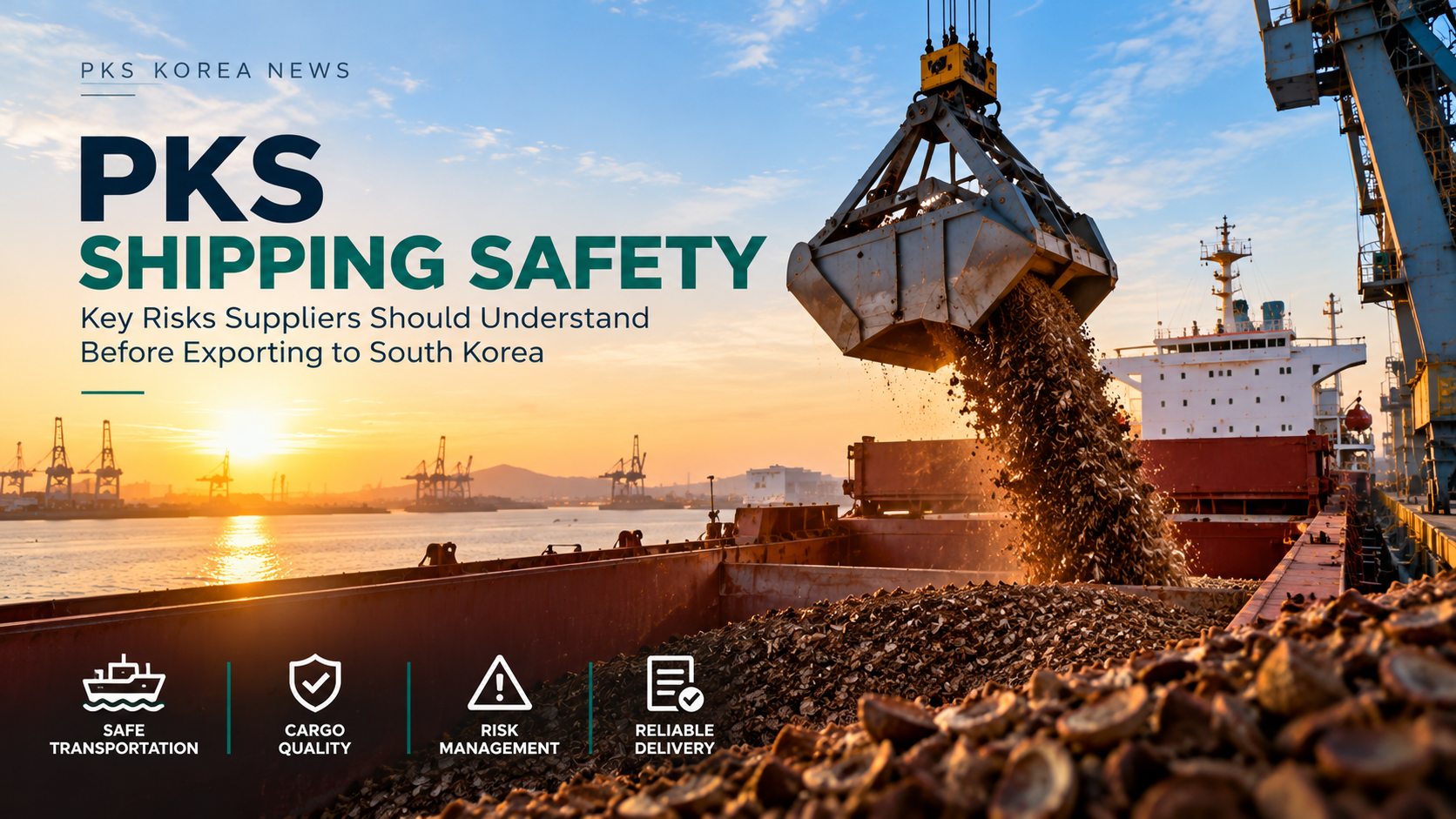
International transportation of Palm Kernel Shell (PKS) requires more than securing a vessel and arranging a loading schedule. For suppliers seeking to export PKS to South Korea, cargo safety, moisture control, proper storage, and shipping documentation are essential considerations.
Although PKS is widely traded as a biomass fuel, its characteristics can create operational and safety risks during storage, loading, ocean transportation, and discharge.
Understanding these risks is an important part of preparing for reliable long-term supply relationships with Korean biomass power producers.
1. Self-Heating and Fire Risk
Like other organic biomass materials, PKS may undergo biological and chemical processes that generate heat under certain conditions.
Moisture, cargo condition, storage duration, and heat dissipation can influence the potential for temperature buildup. In unfavorable circumstances, self-heating may develop into a serious fire hazard.
Suppliers should pay attention to:
- Stockpile temperature and storage conditions
- Moisture exposure and drainage
- Storage duration and cargo turnover
- Signs of unusual heating, smoke, or deterioration
- Applicable vessel and terminal safety requirements
A cargo that appears acceptable at the stockpile may still require careful assessment before shipment.
2. Oxygen Depletion and Hazardous Gases
One of the most serious risks associated with biomass cargoes is the possibility of a hazardous atmosphere developing in enclosed spaces.
Biological activity and other processes may reduce oxygen levels or contribute to the accumulation of gases such as carbon dioxide and carbon monoxide. Gas hazards depend on the cargo and its conditions.
Cargo holds and adjacent enclosed spaces must never be assumed safe for entry simply because the cargo appears stable.
Before any enclosed-space entry, the responsible vessel personnel must follow applicable procedures, including atmospheric testing, ventilation where appropriate, authorization, and emergency preparedness.
A fatal confined-space accident associated with a PKS cargo operation was reported in Japan in 2024. (Source: Japan Transport Safety Board (JTSB) — Official Investigation Report)
The incident underscores the importance of treating enclosed-space hazards as a serious operational concern.
3. Moisture, Leachate, and Cargo Deterioration
Excessive moisture can affect PKS quality and create additional handling and storage problems.
Rain exposure, inadequate drainage, and prolonged storage may contribute to deterioration, while water draining through biomass stockpiles can produce contaminated runoff, commonly referred to as leachate.
Suppliers should consider:
- Protection from unnecessary rain exposure
- Effective stockpile drainage
- Appropriate moisture monitoring
- Measures to limit contamination
- Suitable storage and loading arrangements
Moisture management is important not only for maintaining fuel quality but also for reducing avoidable operational risks.
4. Vessel Suitability and Safe Loading
PKS is generally transported as bulk cargo, making vessel suitability an important consideration.
The quantity that a vessel can safely carry depends on more than its deadweight tonnage. Cargo bulk density, available hold capacity, vessel draft, loading conditions, and port restrictions must also be considered.
Suppliers and their logistics partners should verify that loading arrangements and cargo information meet the requirements applicable to the specific shipment.
Cargo declarations, safety information, and any applicable requirements under the International Maritime Solid Bulk Cargoes (IMSBC) Code should be addressed with the vessel operator and qualified shipping professionals.
5. Quantity and Quality Risks at Destination
Shipping safety and commercial performance are closely connected.
The quantity recorded at the loading port may differ from the quantity recognized at the destination due to moisture changes, handling losses, or differences in weighing procedures.
Quality issues may also result in price adjustments, additional inspection, or disputes, depending on the sales contract.
Before shipment, suppliers should seek clarity regarding:
- Quantity determination and weighing methods
- Moisture and other quality specifications
- Sampling and independent inspection procedures
- Applicable tolerances and price adjustment terms
- Responsibility for cargo-related claims
Clear documentation and contractual terms can help reduce misunderstandings between suppliers and Korean buyers.
6. Why Shipping Readiness Matters to Korean Buyers
For Korean biomass power producers, a competitive PKS offer is important, but price alone does not guarantee reliable supply.
Buyers also need confidence that suppliers can prepare cargo properly, coordinate shipments, maintain relevant documentation, and respond to logistics-related issues.
A supplier’s readiness may therefore involve more than production capacity. Stockpile management, access to suitable loading facilities, export experience, and familiarity with shipping safety requirements can all contribute to a more dependable supply relationship.
PKS Korea’s Perspective
At PKS Korea, we believe that reliable supply begins well before a vessel arrives at the loading port.
Our Certified Vendor Program (CVP) is designed to help us better understand prospective suppliers’ sourcing capabilities, quality practices, stockpile arrangements, loading port access, and export readiness.
PKS Korea does not issue maritime safety certifications or replace the responsibilities of vessel operators, cargo inspectors, or other qualified professionals.
Our objective is to develop a more transparent and dependable international PKS supplier network for the South Korean biomass energy market.
Reliable PKS supply requires more than competitive pricing. It requires attention to cargo safety, quality preservation, logistics readiness, and clear commercial responsibilities.
International PKS suppliers interested in developing business opportunities in South Korea are invited to explore the PKS Korea Certified Vendor Program (CVP).