How PKS suppliers can manage moisture, storage, logistics, and shipping risks during periods of heavy rainfall.
Why the Rainy Season Matters for PKS Exports
Palm Kernel Shell (PKS) is an important biomass fuel used by power plants in Asian markets, including South Korea.
However, PKS supply chains in tropical producing countries face an important operational challenge: heavy and prolonged rainfall.
For Korean power plant buyers requiring regular shipments throughout the year, seasonal weather conditions cannot simply be avoided. Suppliers must be prepared to maintain consistent cargo quality and delivery schedules even during periods of heavy rain.
1. Moisture Content and Fuel Quality
Rainwater absorbed by PKS increases its moisture content and reduces the useful energy delivered per tonne of fuel.
Excessive moisture can also create problems during storage and maritime transportation, including microbial activity, self-heating, and hazardous gas accumulation.
Suppliers should therefore monitor moisture levels throughout the supply chain, rather than relying solely on quality measurements taken at the production site.
Important precautions include:
- Protecting processed PKS from direct rainfall.
- Using suitable covered storage facilities.
- Maintaining effective drainage around stockpiles.
- Testing moisture content before shipment.
- Confirming that cargo conditions meet contractual specifications and applicable shipping safety requirements.
2. Storage Management During Heavy Rainfall
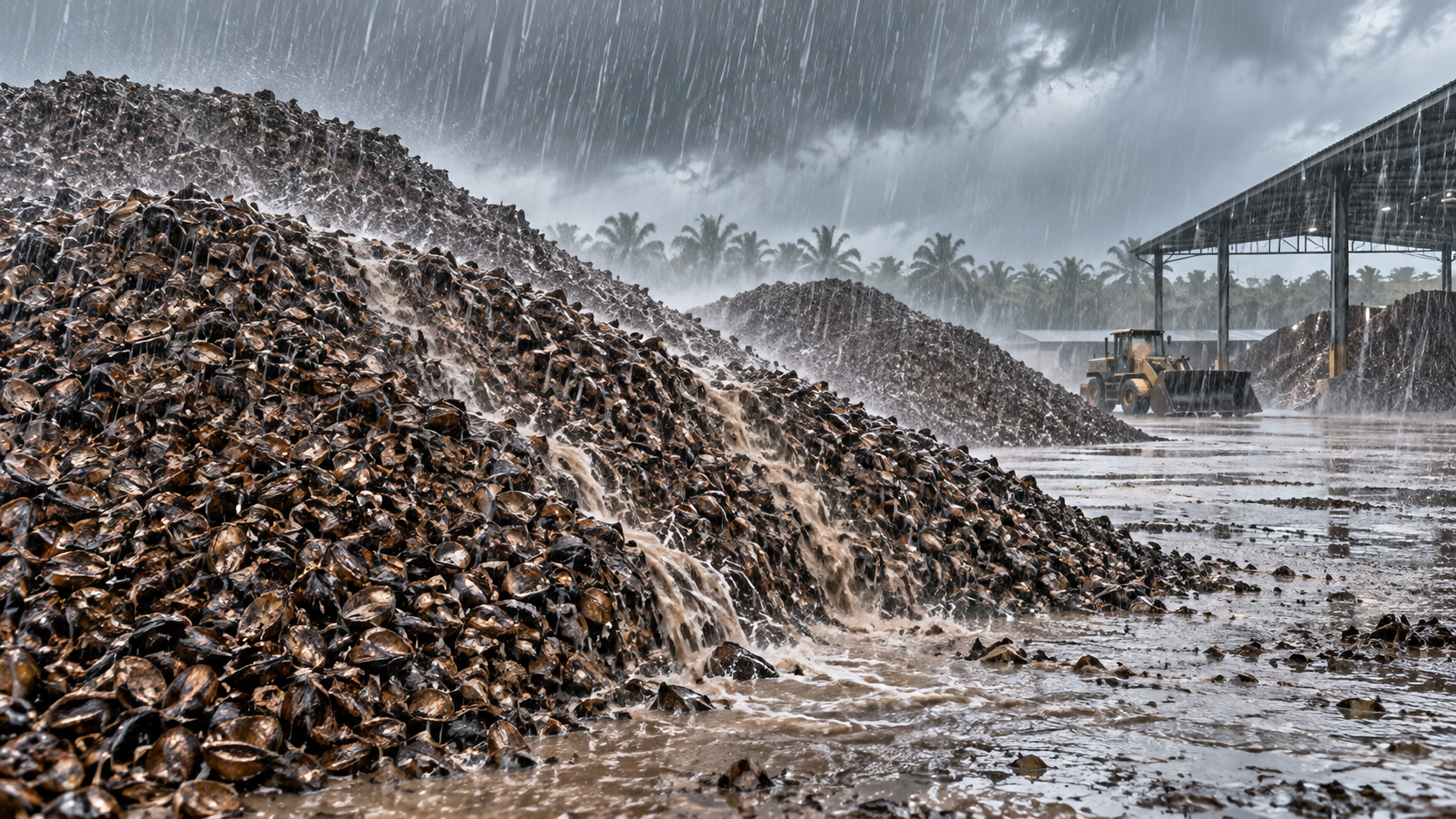
Open stockpiles are particularly vulnerable to tropical rainfall.
Even when the surface of a stockpile appears dry, moisture may remain trapped inside or accumulate in lower layers.
Covered warehouses, properly maintained storage surfaces, and effective drainage systems can significantly reduce unnecessary water exposure.
Suppliers should also separate incoming wet material from inspected, shipment-ready inventory.
Where drying is necessary, it should be performed under controlled conditions, with appropriate temperature monitoring and fire-prevention measures.
3. Inland Transportation and Port Operations
Rainy-season problems extend beyond moisture content.
Heavy rainfall may affect road conditions, truck availability, stockpile handling, and cargo transportation between palm oil mills, collection yards, and loading ports.
Port operations may also be interrupted when rain threatens to enter vessel cargo holds.
To reduce disruption, suppliers should establish realistic transportation schedules, maintain sufficient preparation time, and coordinate closely with port operators and shipping agents.
Shipment schedules should include reasonable allowances for weather-related delays.
4. Example: PKS Shipments from Calang, Indonesia
Consider a Korean power plant requesting a PKS shipment from the Calang area of Aceh, Indonesia, during a period of heavy rainfall.
The supplier may have sufficient PKS inventory but still face challenges involving outdoor storage, inland transportation, and vessel loading.
Before confirming shipment readiness, the supplier should verify:
- Whether the required quantity is available in protected storage.
- Whether the cargo meets the agreed moisture and quality specifications.
- Whether transportation routes remain operational.
- Whether suitable loading arrangements and weather contingency plans are available.
- Whether independent inspection and safe carriage documentation can be completed.
This is an illustrative operational scenario, not a report of a specific shipment or supplier.
5. Maritime Safety and Cargo Verification
Moisture management is not only a commercial quality issue. It is also a maritime safety concern.
PKS cargoes have been associated with self-heating, oxygen depletion, and the generation of gases such as carbon monoxide and methane.
Before loading, cargo characteristics and carriage requirements should be reviewed with the vessel operator and relevant competent authorities under the applicable International Maritime Solid Bulk Cargoes (IMSBC) Code procedures.
Contractual moisture specifications alone should not be treated as proof that a cargo is safe for maritime transportation.
Independent sampling, temperature monitoring, proper documentation, and appropriate vessel safety precautions are essential.
6. Building a Reliable Year-Round Supply Chain
Reliable PKS exports depend on more than annual production capacity.
For suppliers serving Korean power plants, the ability to maintain quality and shipment readiness during unfavorable weather conditions is equally important.
Effective rainy-season preparation should include protected inventory, moisture monitoring, transport contingency planning, independent quality verification, and coordination with shipping partners.
The rainy season does not necessarily prevent PKS exports. However, successful year-round supply requires advance preparation, effective moisture control, and verified cargo safety.