Biomass Energy in South Korea
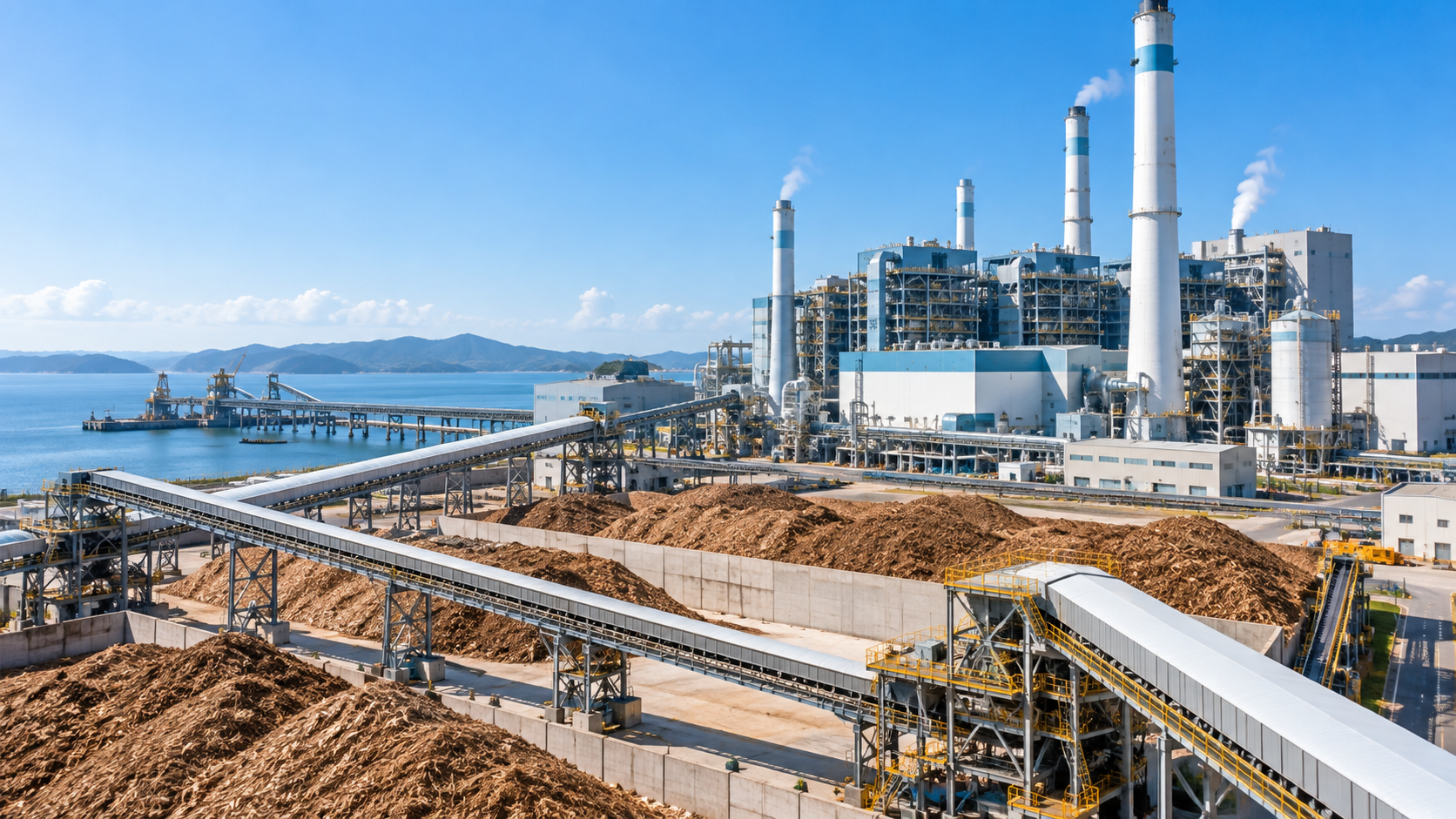
South Korea’s biomass energy sector relies on a combination of domestic and imported biomass fuels to support electricity generation. Wood pellets, wood chips, and palm kernel shells (PKS) are among the fuel types used or considered in biomass power generation.
For biomass power plants, fuel procurement is not simply a matter of securing the lowest price. Consistent quality, reliable delivery schedules, logistics efficiency, and long-term supply stability are equally important.
As a result, developing dependable biomass fuel supply chains remains an important consideration for both Korean power producers and overseas suppliers.
1. Fuel Demand and Procurement Requirements
Biomass power plants require continuous fuel supplies to maintain stable operations.
Depending on plant specifications, environmental regulations, and procurement policies, fuel requirements may differ in terms of calorific value, moisture content, ash content, and other technical characteristics.
For imported biomass fuels, Korean buyers generally need to evaluate several factors:
- Fuel Quality: Net Calorific Value (NCV), moisture, ash content, and consistency between shipments.
- Supply Capacity: The supplier’s ability to provide agreed quantities over a defined delivery period.
- Logistics Reliability: Suitable loading ports, stockpile facilities, and predictable shipment schedules.
- Commercial Competitiveness: Total procurement costs, including ocean freight and applicable destination expenses.
- Documentation and Compliance: Reliable quality certificates, shipping documents, and applicable regulatory requirements.
These factors influence the suitability of overseas biomass suppliers for the Korean market.
2. The Role of Palm Kernel Shells (PKS)
Palm kernel shells are a by-product of the palm oil industry and can be utilized as solid biomass fuel.
Malaysia and Indonesia are important potential sourcing markets because of their established palm oil industries and associated PKS generation.
For Korean biomass buyers, PKS may provide an additional fuel sourcing option where plant specifications, procurement conditions, and applicable regulations permit its use.
However, PKS quality and availability can vary according to collection methods, processing, storage conditions, and seasonal weather.
Therefore, reliable PKS procurement requires more than identifying a supplier with access to palm oil mills. Buyers must also evaluate the supplier’s ability to collect, prepare, store, and export consistent quantities.
3. Why Supply Chain Reliability Matters
International biomass procurement involves several interconnected stages, from fuel collection at the origin to delivery at the destination.
A typical imported PKS supply chain may include:
Palm Oil Mills → PKS Collection and Aggregation → Stockpile and Quality Control → Export Port → Ocean Transportation → Korean Import Terminal → Power Plant
Delays or quality problems at any stage can affect the overall delivery schedule.
For example, insufficient stockpile protection during heavy rainfall may increase fuel moisture, while limited inland transportation capacity can disrupt cargo preparation before vessel arrival.
Similarly, inadequate coordination between suppliers, logistics operators, and buyers may lead to shipment delays and additional costs.
A reliable supply chain therefore depends on effective planning, transparent communication, and appropriate quality management throughout the process.
4. Supply Diversification and Long-Term Planning
For Korean biomass buyers, depending on a limited number of suppliers or sourcing regions may increase exposure to supply disruptions.
Developing relationships with qualified suppliers across different production areas can provide greater flexibility when evaluating procurement options.
Long-term supply planning also requires an understanding of seasonal production conditions, port capabilities, available stockpiles, and expected shipment schedules.
From the supplier’s perspective, providing accurate and regularly updated supply information can help Korean buyers assess procurement opportunities more effectively.
This is particularly important for suppliers seeking to establish long-term business relationships rather than relying solely on occasional spot transactions.
5. Outlook for the Korean Biomass Fuel Market
The future demand for imported biomass fuels in South Korea will be influenced by several factors, including energy policy, renewable energy support mechanisms, power plant operating conditions, environmental requirements, and fuel economics.
Consequently, demand for individual biomass fuels should not be assumed to increase continuously.
Nevertheless, wherever biomass generation remains commercially and operationally viable, reliable fuel procurement will continue to be an essential part of power plant operations.
For overseas PKS suppliers seeking opportunities in South Korea, the ability to demonstrate dependable supply capacity, consistent quality, competitive logistics, and transparent commercial practices will remain important.
Conclusion
South Korea’s biomass energy market presents potential opportunities for international fuel suppliers, but successful market participation requires more than offering competitive prices.
Supply reliability, quality consistency, and effective logistics coordination are fundamental to building sustainable relationships with Korean biomass power producers.
For PKS suppliers in particular, strengthening these capabilities can improve their readiness to participate in international biomass fuel supply chains.
PKS Korea | Biomass Energy Division of JISUTRADE
Industry Insights — October 29, 2026
This article provides general industry information and does not represent a forecast of confirmed procurement volumes or future fuel prices.